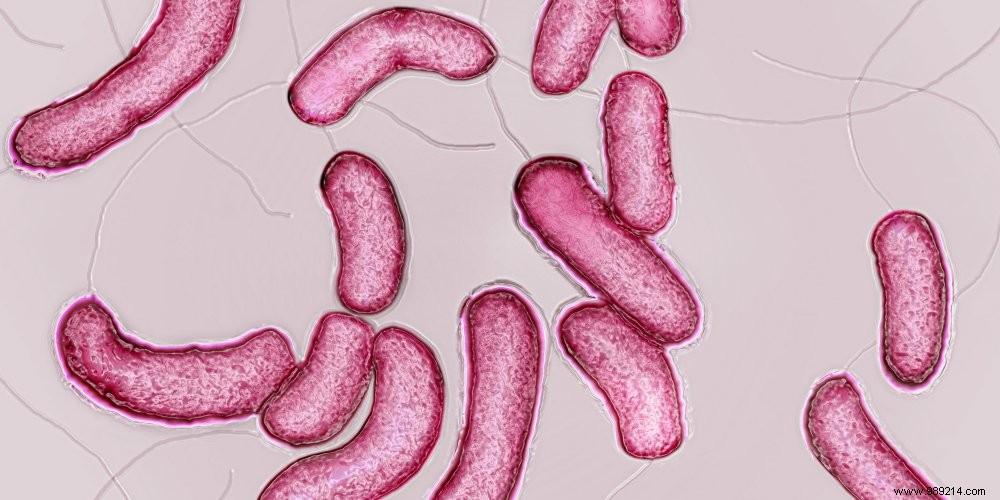
 Infectious disease specialists are raising alarms over the surge in bacteria resistant to treatment. The World Health Organization (WHO) labels this "one of the greatest threats to human health."
 Since Alexander Fleming discovered penicillin in 1928, antibiotics have saved countless lives by combating infection-causing bacteria. Yet, this medical breakthrough is faltering due to overuse and misuse, allowing many pathogens to evolve resistance.
Without intervention, we could revert to an era where minor wounds lead to fatal infections, and post-surgical care for prosthetics or transplants becomes far riskier.
The crisis is escalating. Globally, resistant bacteria contribute to about 700,000 deaths annually. A 2018 The Lancet study reported 33,000 such deaths in the EU in 2015, including 5,500 in France. Projections warn that by 2050, infections could kill someone every three seconds worldwide, surpassing cancer mortality, per WHO estimates.
Video of the day:Enterobacteriaceae like Escherichia coli and Klebsiella pneumoniae are particularly alarming, with resistance to third-generation cephalosporins rising from 2% in 2007 to 10.2% in 2017 for the former, and 10% to 28.8% for the latter. Tuberculosis bacilli also pose growing risks, with 600,000 rifampicin-resistant cases in 2017.
Indiscriminate antibiotic use has fueled this resistance. Despite targeting only bacteria, they're often prescribed for viral infections like colds or flu, prompting gut microbiota to develop—and share—resistance genes with pathogens.
France's antibiotic consumption in community settings remains high—twice Germany's and three times the Netherlands', per a 2019 Court of Auditors report. It's worse in parts of Asia, Africa, and South America, where they're sold without prescriptions, even in markets. Low doses promote resistance, and global travel spreads these "superbugs."
Half of global antibiotics go to livestock and poultry, often to accelerate growth rather than treat illness. Banned in Europe, this persists elsewhere, including the US, breeding resistant strains that enter the environment and human food chains.
Nosocomial infections affect one in 20 French patients, per the Court of Auditors. Hospitals concentrate vulnerable individuals and resistant germs. Simple lapses, like skipping hand hygiene with alcohol-based gel, enable transmission. A 2018 The Lancet study linked 75% of multidrug-resistant infections to hospitals.

Excessive sterilization may backfire; a 2019 University of Graz study found ultra-resistant germs thriving in high-control units like ICUs.
Medical tourism amplifies risks in regions with rampant resistance, such as India or North Africa.
Use antibiotics only when necessary, and complete the full course as prescribed—stopping early fosters resistance.
For sore throats, rapid tests distinguish bacterial from viral causes; antibiotics are futile against viruses. Yet, only 40% of French doctors use them, though pharmacists can now too.
Big Pharma has deprioritized new antibiotics for more lucrative drugs, but startups are innovating—decoding resistance mechanisms or sourcing boosters from microbes.
Bacteriophages, bacteria-killing viruses, offer hope via phage therapy, long used in Eastern Europe but sidelined by antibiotics. In France, it's limited to dire cases, yet yields strong results, like at Lyon’s Croix-Rousse Hospital for bone infections, paving the way for broader adoption.
