At CEA-Paris-Saclay, experts are pioneering an advanced MRI system set to transform medical imaging. Recent first images from this groundbreaking device are highly promising, with initial tests conducted on a pumpkin to validate its capabilities.
This is the world's most powerful MRI designed for human neuroimaging, as noted by Stanislas Dehaene, director of the NeuroSpin platform at CEA-Paris-Saclay, in an October 7, 2021 press release. The Iseult project showcases engineering excellence, powered by its unprecedented magnet.
Remarkable specs include a total weight of 132 tons, dimensions of 5 m long with a 5 m external diameter and 90 cm internal bore. It generates a nominal 11.7 Tesla magnetic field—far surpassing standard hospital MRIs at 1.5-3 Tesla—fueled by an electric current of 1,500 amps through coils cooled by superfluid helium at -271.35°C.
This high-field magnet enables ultra-high-resolution imaging, with CEA recently releasing inaugural results at 400 microns resolution across all three dimensions.
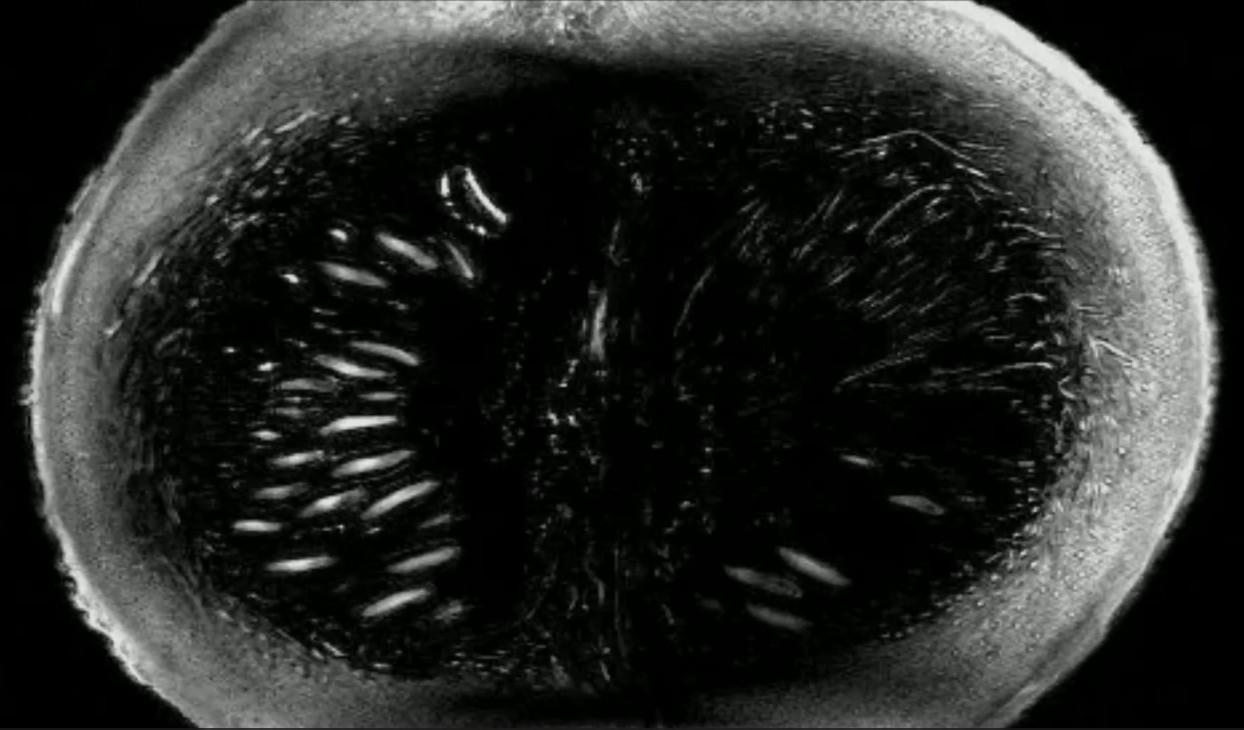
In a clever proof-of-concept, researchers selected a pumpkin due to its brain-like attributes: similar size, varied textures, consistency, and ~90% water content (close to the brain's 80%).
This test confirmed the technology's feasibility. The team now aims to refine it for an effective resolution of 100-200 microns, enhancing precision beyond the initial 400-micron images.
This innovation promises to advance basic neuroscience, cognitive studies, and understanding of conditions like Alzheimer's and Parkinson's, while accelerating clinical diagnoses. Human trials will follow regulatory approval.
