Groundbreaking research from Columbia University provides compelling evidence linking psychological stress to hair graying in humans. The study identifies key proteins involved and reveals that reducing stress can sometimes reverse the process.
Historical accounts, like Marie-Antoinette's hair reportedly turning white overnight before her execution in 1793, describe "sudden canities"—rapid hair whitening also noted in WWII soldiers. While not scientifically observed until now, mounting evidence shows chronic stress accelerates natural graying.
Hair color comes from melanin pigments produced by melanocytes in the hair follicle bulb. As we age, melanocyte numbers decline gradually, reducing pigment supply and leading to gray, then white hair.
Stress plays a role too. A January Nature study in mice found that norepinephrine—a key stress neurotransmitter—enters melanocyte stem cells, prematurely depleting pigment reserves. Human confirmation was needed.
Published recently in eLife, Columbia researchers analyzed this in fourteen volunteers via "stress diaries" and ultra-thin hair slices (1/20th mm, representing ~1 hour of growth). High-resolution scanning mapped microscopic graying timelines to reported stressors.
Results showed "striking associations" between stress events and graying episodes.
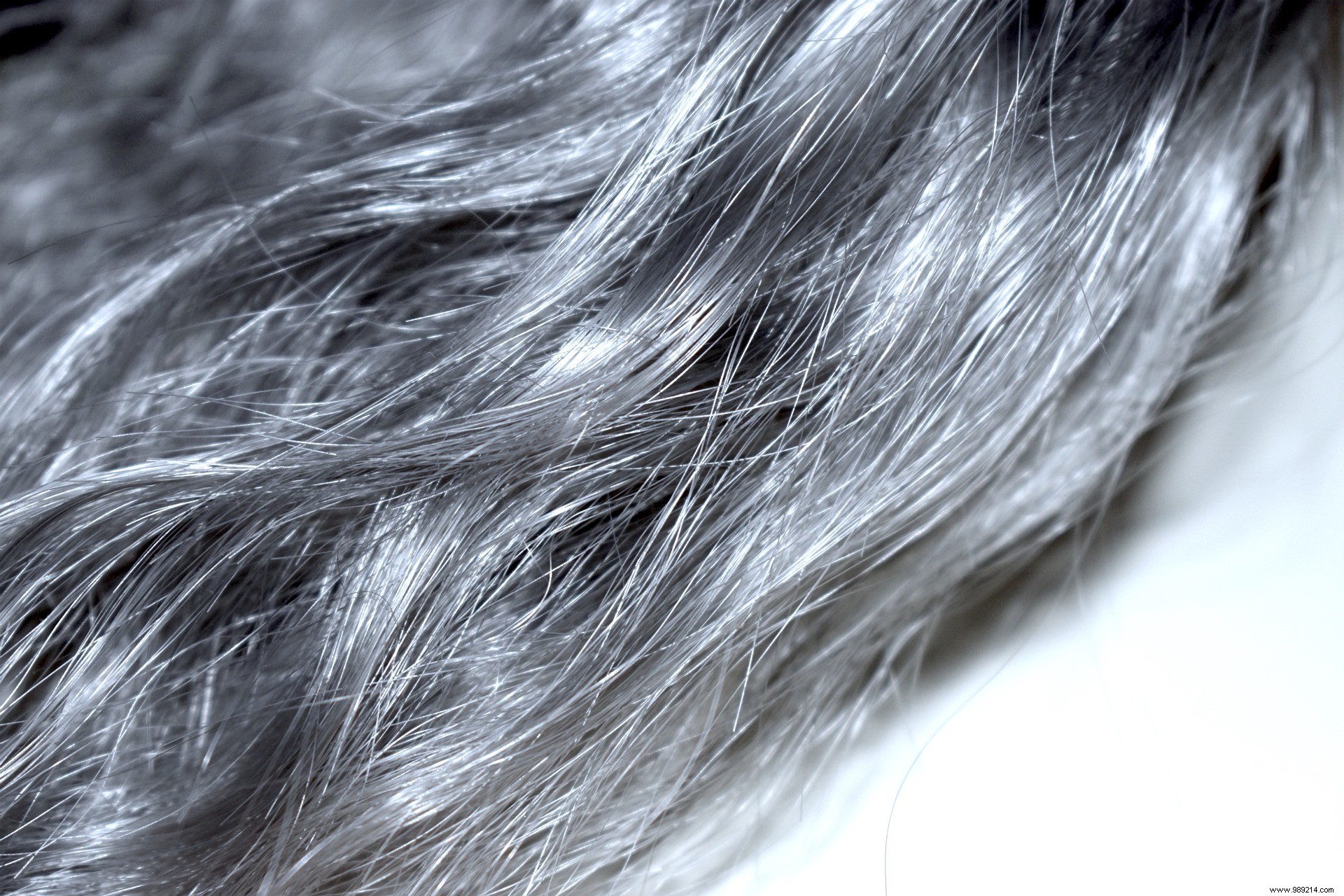
Remarkably, graying reversed with stress relief. Lead author Ayelet Rosenberg notes five hairs from one vacationer "darkened again, synchronized during the trip"—a first quantitatively documented in humans.
Protein analysis along hairs revealed changes in 300 proteins tied to graying, linked via modeling to stress-induced mitochondrial shifts.
While age dominates long-term graying, stress reduction may restore color temporarily in midlife. "Hair nears a graying threshold with age," Rosenberg explains. "Stress pushes it over; relief pulls it back—for a time."
