As summer nears, selecting the right sunscreen is crucial. This staple for sun protection faces ongoing scrutiny from scientists and regulators. Now, U.S. researchers are exploring an intriguing alternative: methylene blue.
Sunscreens remain the gold standard for shielding skin from harmful UVA and UVB rays. Yet, the Palau archipelago—part of Micronesia—has become the world's first territory to ban sunscreens containing two harmful chemicals: oxybenzone and ethylhexyl methoxycinnamate, effective this year. These chemical filters absorb UVA (320-400 nm) and UVB (280-320 nm) rays, which trigger oxidative stress, premature aging, burns, and DNA damage.
While effective, oxybenzone raises health concerns as an endocrine disruptor and allergen. Environmentally, it devastates marine life, especially corals. In a May 28, 2021, study published in Scientific Reports, University of Maryland researchers introduced methylene blue as a novel chemical UV filter to potentially replace oxybenzone.
First synthesized in 1876 by Prussian chemist Heinrich Caro, methylene blue (methylthioninium chloride) is a phenothiazine derivative used as both a medication and dye. Its potent antioxidant properties and unique molecular structure prompted these experts to test it as a UV filter.
The team previously demonstrated methylene blue activates metabolic pathways for DNA repair. Building on this, they exposed human keratinocytes—key skin cells—to escalating UVB doses after methylene blue treatment. Results showed significantly less damage in treated cells compared to controls. Methylene blue also outperformed oxybenzone, absorbing a broader UV spectrum, including UVB and high-energy UVC.
For environmental impact, tests on Xenia umbellata corals over seven days at equal doses (1 µM) revealed health deterioration in oxybenzone-exposed corals but none in those treated with methylene blue.
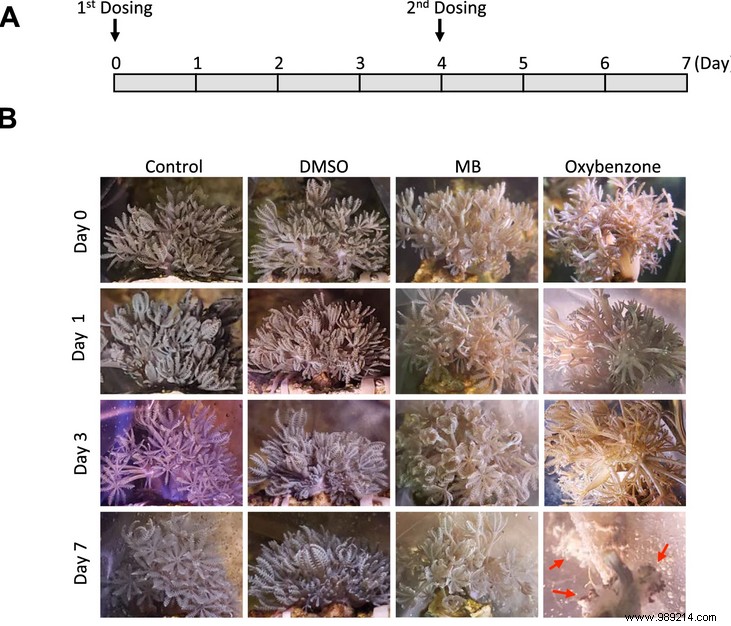
These results suggest methylene blue as a viable, less toxic option, though broader environmental studies are needed. It won't appear in commercial sunscreens until further validation from rigorous scientific research.
