Just days ago, 15 volunteers in the Deep Time project emerged into daylight after 40 days deep in a cave. Scientists are now diving into the rich dataset collected. We explore the experiment's goals and early participant accounts.
On March 14, 2021, 15 volunteers aged 27 to 50 entered the Lombrives cave in Ussat, Ariège. Forty days later, on April 24, they resurfaced. Led by explorer and human adaptation expert Christian Clot, the mission investigated confinement's toll—like COVID-19 lockdowns—that erodes spatio-temporal awareness, strains adaptability, and heightens emotions.
Devoid of watches, phones, or natural light, the group endured a steady 12°C temperature and 95% humidity. They powered their setup with a pedal boat generator and hauled water from 45 meters below.
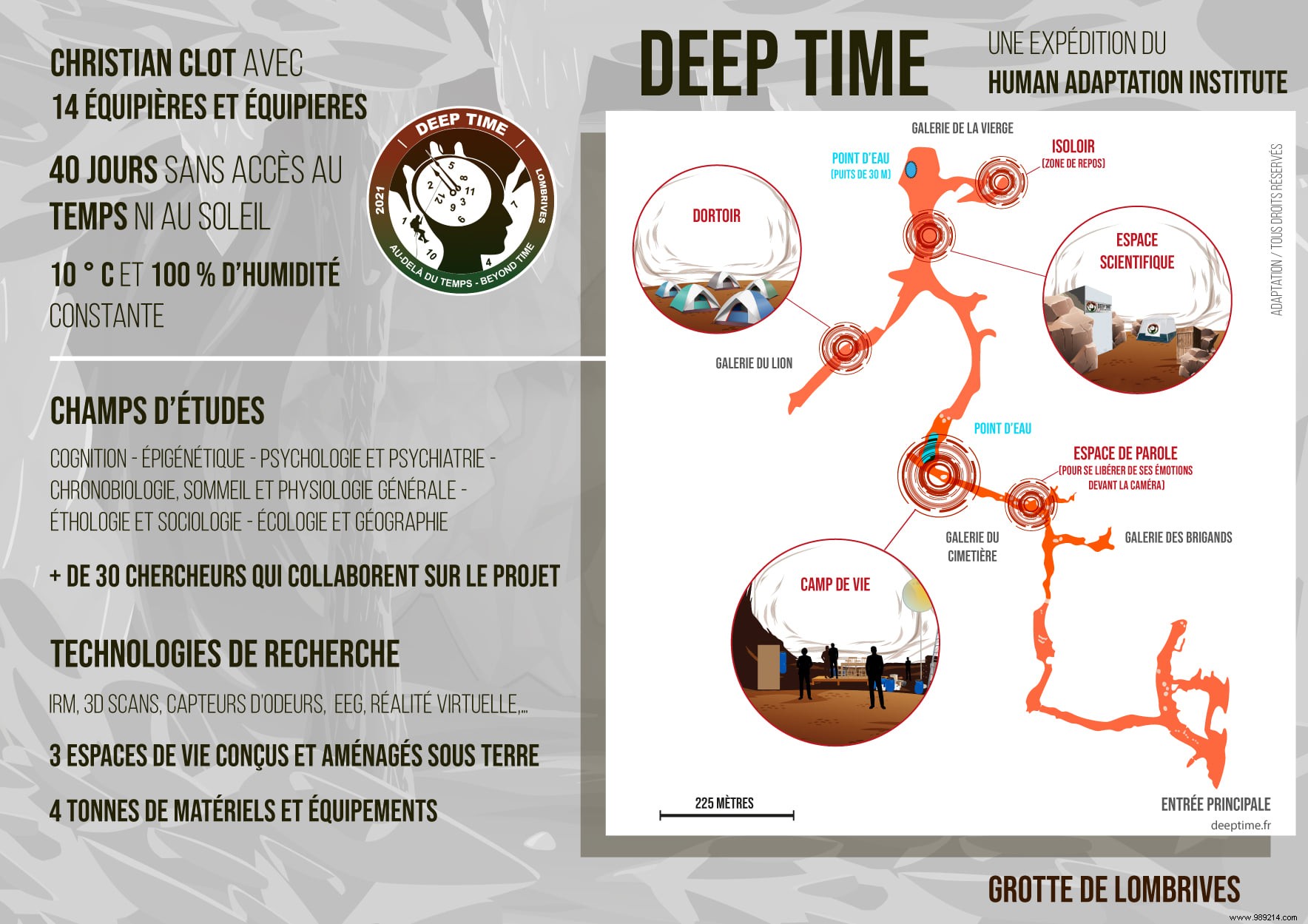
Emerging to a brilliant sky, volunteers wore sunglasses for protection. Researchers will scrutinize data from sensors tracking body temperature, cortisol, and melatonin. Electroencephalograms captured cognitive function, sleep cycles, and more.
A core aim: evaluating group cohesion in extreme novelty. Preliminary feedback confirms everyone's well, despite sleep cycle disruptions and varying personal rhythms.
Dive deeper with the Adaptation Institute's YouTube podcast—first episode available at article's end. GEO magazine features Christian Clot in a live Instagram session Thursday, April 29 at 5 p.m.
