Researchers have detected cholesterol buildup in the arteries of five ancient mummies, indicating that heart disease affected humans as far back as 4,000 years ago. Findings are detailed in the American Heart Journal.
Prior studies using CT scans identified advanced atherosclerosis—plaque buildup that restricts blood flow—in mummies from various eras: 500-year-old Inuit remains from Greenland, over 3,000-year-old Egyptian mummies, and Ötzi the Iceman, a 5,300-year-old Alpine discovery whose blood vessels suggested severe cardiovascular strain.
These scans revealed only late-stage damage, leaving an incomplete picture of heart disease prevalence in antiquity. A new study provides clearer insights into early risks.
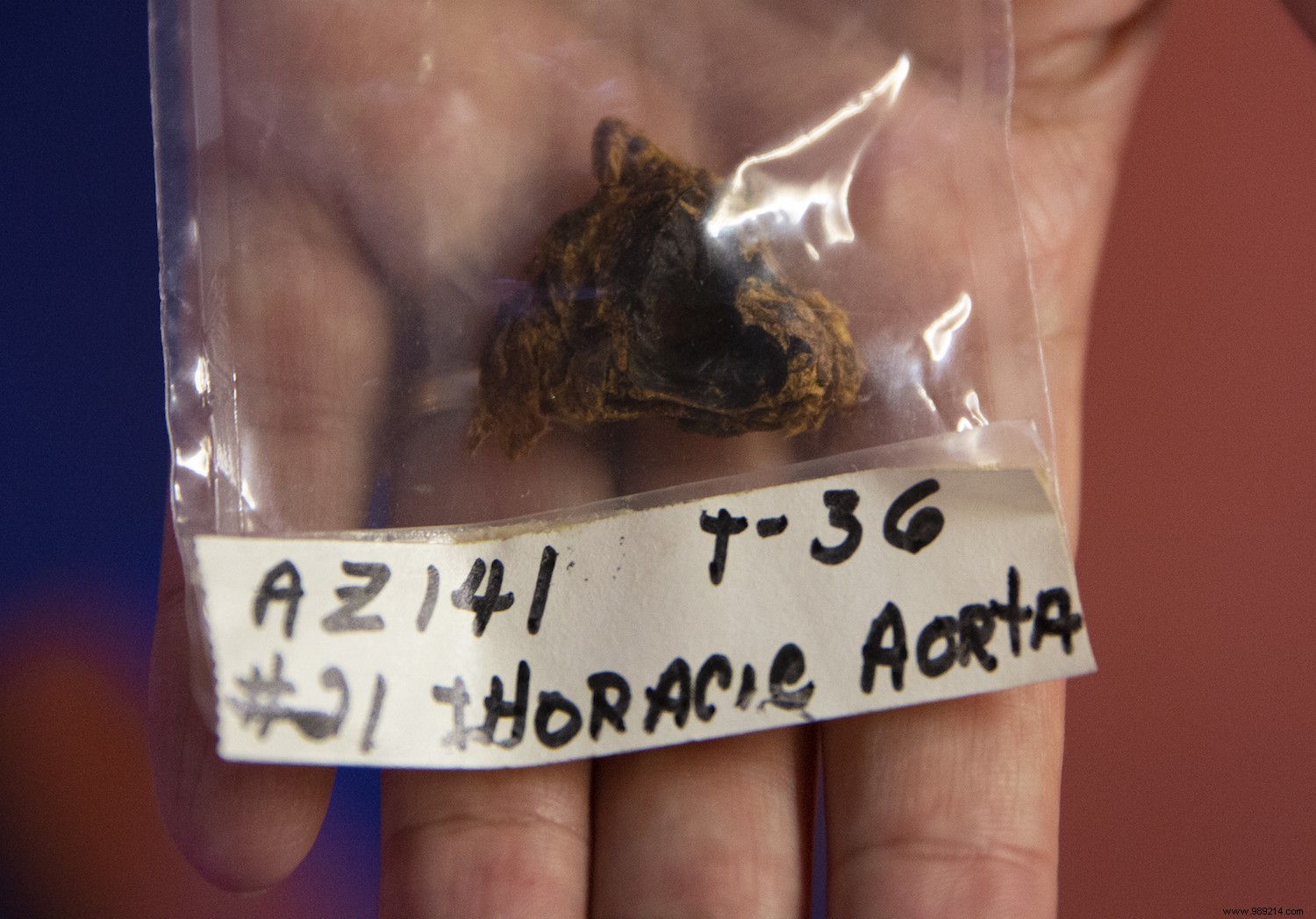
Led by Mohammad Madjid at McGovern Medical School, the team examined arteries from five mummies—three men and two women aged 18 to 60, from ancient South America and Egypt—using near-infrared spectroscopy.
This technique isolated early cholesterol lesions, the precursors to plaques that impair blood flow and trigger heart attacks.
This marks the first detection of early atherosclerosis in ancient remains, showing it's not a modern affliction.
Cholesterol deposits form as the body's repair response to arterial wall injuries from inflammation or trauma. Over time, these walls attract white blood cells, fostering cholesterol accumulation that evolves into streaks, lesions, and blockages, starving the heart of oxygen-rich blood.
Notably, three mummies succumbed to pneumonia, one to kidney disease, and one to an unknown cause—none to heart issues. Like most ancients, they didn't survive long enough for atherosclerosis to prove fatal.
Source
Related Articles:
