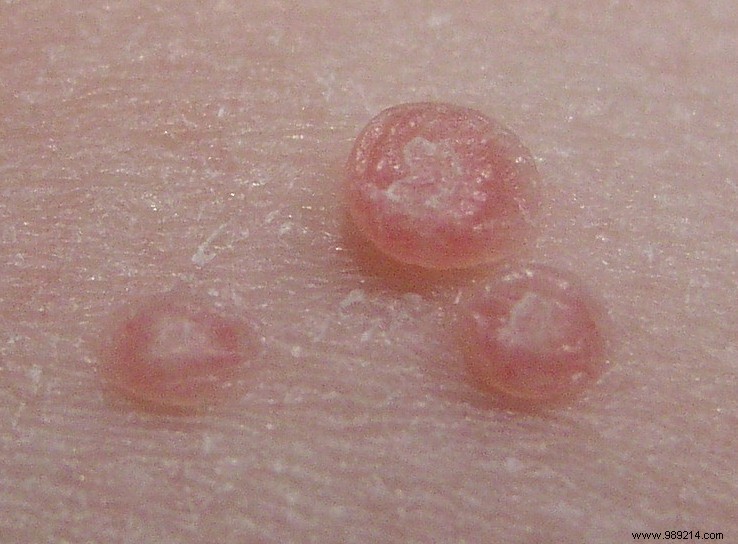
Children frequently encounter contagious infections like roseola or chickenpox. Molluscum contagiosum is another highly infectious condition in this category.
This poxvirus produces small, pearly bumps that can be challenging to eliminate. It spreads easily through skin-to-skin contact and is considered a sexually transmitted infection (STI) in adults.
Fortunately, molluscum contagiosum is benign and typically resolves on its own. However, in children, it can lead to secondary eczema and intense itching. Prompt treatment can speed recovery and prevent complications.
In children, it spreads via close physical contact, common in school settings. Exclusion from school may be necessary until lesions clear.
The virus causes small, white or flesh-colored growths. Lesions redden as they heal. In children, they often appear on the face, neck, armpits, arms, abdomen, buttocks, and thighs. In adults and teens, they typically affect the genitals.
A key feature is the central, waxy core that appears when gentle pressure is applied. Avoid squeezing lesions, as this risks spreading the virus. If a lesion ruptures accidentally, disinfect the area and hands thoroughly.
Direct skin contact or indirect contact with contaminated items transmits the virus easily. Shared towels or clothing can spread it. It's common in contact-heavy activities like swimming, wrestling, or team sports.
In adults and adolescents, sexual transmission is primary. The incubation period lasts weeks, so lesions may not appear immediately, allowing unwitting spread.
Consult a doctor promptly if symptoms appear for accurate diagnosis and to rule out similar conditions. Physicians often remove lesions via curettage using a curette.
Though it sounds uncomfortable, anesthetic cream applied an hour prior ensures a painless procedure. Cryotherapy with liquid nitrogen is another effective method, freezing and destroying lesions. Minor scarring may occur but fades with prescribed creams.
Photo credit: Evanherk from nl via Wikimedia Commons
