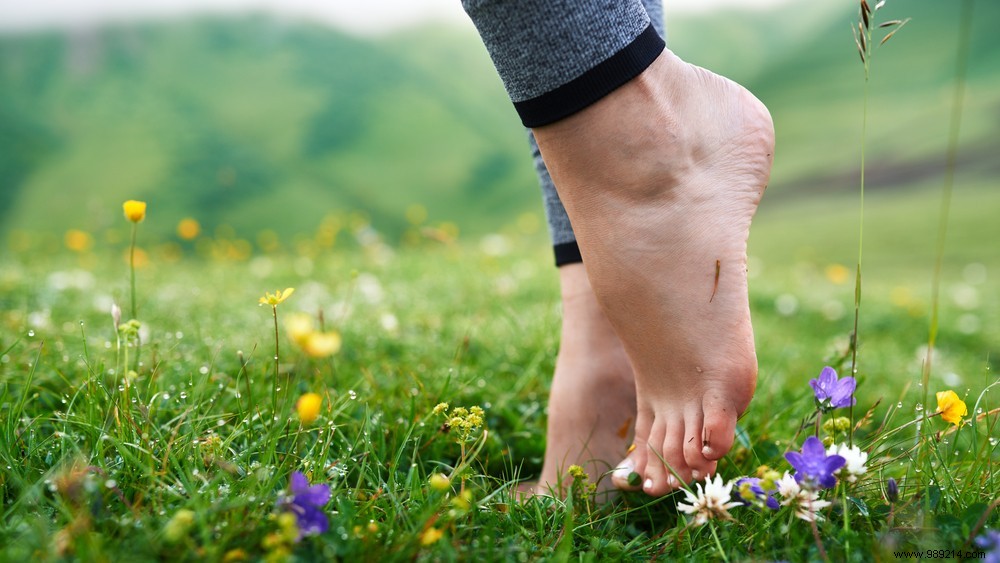
Ditch the shoes and reconnect with the ground beneath your feet.
Walking barefoot isn't just for hippies anymore—it's a growing trend embraced by celebrities like Angelina Jolie, Shailene Woodley, Jennifer Aniston, Britney Spears, Katy Perry, Joss Stone, and Miley Cyrus. While it might seem unconventional, with risks of dirt and injury, science shows it's packed with health advantages.
Our ancestors navigated rocks, thorns, sand, and mud barefoot, using their feet as vital tools for survival. In many parts of the world today, barefoot living remains the norm, and it's gaining traction in the U.S. and Europe. Dr. Isaac Eliaz, an American expert in vitality and immunity, highlights 'earthing'—direct contact with the Earth—as a practice backed by studies in the Journal of Environmental and Public Health.
Your feet form the foundation of your body, with 26 bones, 19 muscles, 33 joints, and 107 ligaments and tendons enabling natural movement. Shoes, even supportive ones, restrict this. Barefoot walking strengthens foot, ankle, and calf muscles, improving posture, balance, and alignment to prevent injuries in knees, hips, back, and neck.
Feet also aid nerve conduction, blood circulation, and balance. Muscle contractions pump blood to extremities; lazy foot muscles from shoes can lead to poor circulation, cold feet, and imbalance.
Barefoot walking demands mindfulness, stimulating reflex points linked to every body part. This acts as free reflexology, initially uncomfortable but ultimately beneficial.
Researcher Clinton Ober's book Earthing explains how grounding to the Earth's negative ions promotes relaxation, better sleep, and stress reduction. Practices like tai chi and yoga are traditionally barefoot. A 2012 U.S. study found earthing balances cortisol, the stress hormone tied to mood, anxiety, depression, and sleep issues.
Bournemouth University researchers observed barefoot schoolchildren from 25 countries: they were more relaxed, arrived earlier, read more, stayed longer, concentrated better, and experienced less bullying—creating a positive atmosphere that boosts performance. These effects likely extend to adults.
Netherlands barefoot paths offer safe, natural routes through mud, leaves, and stones—minus hazards like glass. Discover 6 top trails to experience the Earth's textures safely.
By Rianne Sepers | Image: Shutterstock
