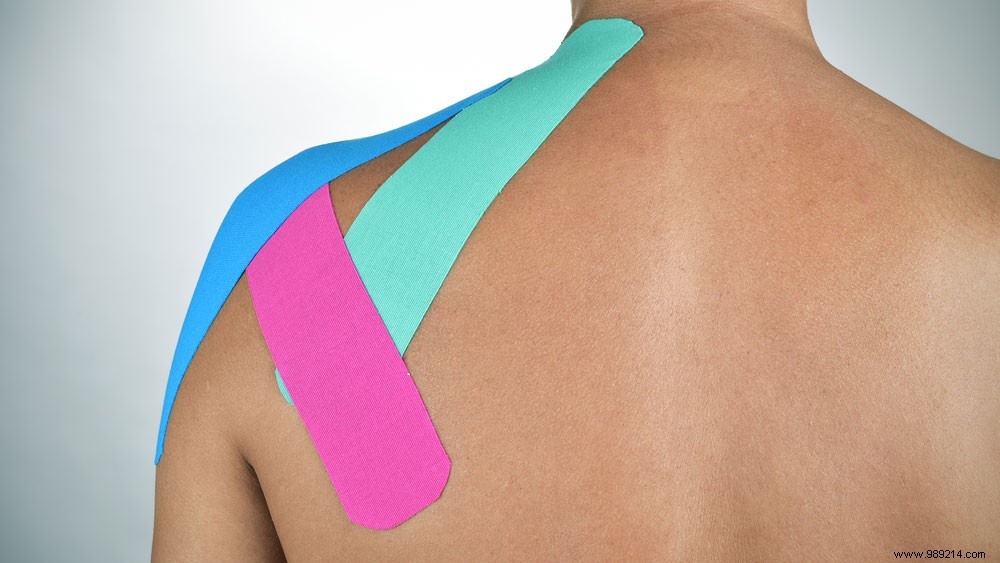
Athletes frequently apply colorful tape to support muscles and joints, promoting faster injury recovery. But how does this tape work, and how does it differ from standard adhesive tape?
Classic white sports tape is non-elastic, ideal for immobilization and stabilization. In contrast, elastic kinesio tape supports joint function and muscle performance through various therapeutic techniques.
Read also: 3 signs that you are facing an injury
No. Originating from Japan, kinesio tape colors draw from color therapy principles. Blue promotes relaxation for inflammation, while red boosts strength and circulation. All tapes use the same material, delivering identical effects.
Proper application is crucial, especially for kinesio tape. Too loose, and it provides no support; too tight, and it risks skin irritation or restricted blood flow. Apply smoothly without wrinkles to avoid blisters. First-timers should consult a physiotherapist, who can recommend the right tape and teach self-application techniques.
Now from €1.99
To the digital kiosk
This article previously appeared in the Santé of April 2018 | Image: Shutterstock
