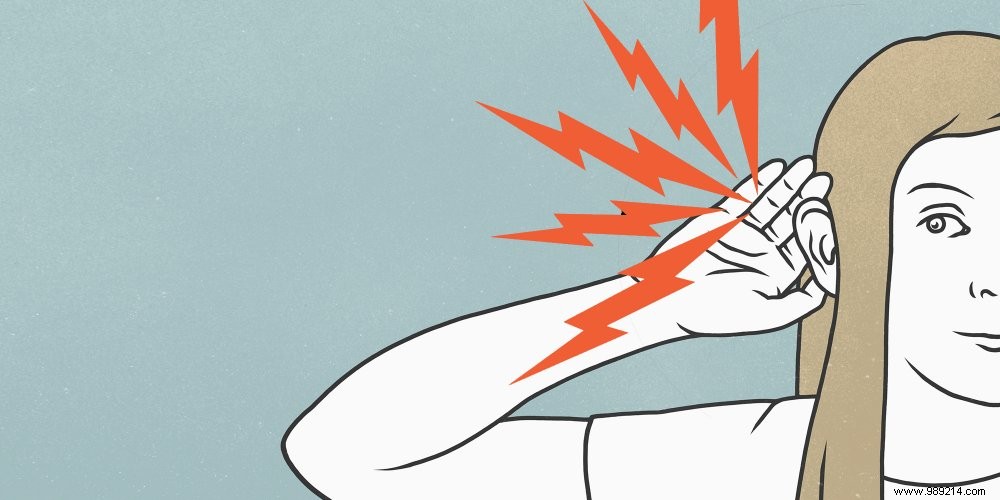
 Buzzing, hissing, or ringing in the ears affects 16 million people in France, leading to stress, fatigue, anxiety, and even depression in severe cases. The good news? Effective solutions exist.
 Permanent buzzing, ringing, or whistling in the ears can severely impact daily life. Most often, tinnitus stems from treatable physiological causes like otitis, earwax buildup, dental issues, cervical neuromuscular disorders, thyroid dysfunction, or hypertension.
In rare instances, it may signal a venous malformation or auditory nerve cancer. However, "in 95% of cases, tinnitus results from age-related ear aging or sound trauma damaging the inner ear's hair cells," explains Dr. Pascal Foeillet, an ENT specialist. Today's teens and young adults are increasingly affected by blasting music through MP3 players.
A thorough exam, including cerebral MRI and audiogram, pinpoints the cause—allowing treatments like infection clearance, blood pressure management, or minor surgery.
Sudden onset post-concert? Corticosteroids and vasodilators can help if treated within 24-48 hours. See an ENT specialist urgently. Once established, tinnitus is tough to eliminate, so adaptation becomes key.
Video of the day:Tinnitus triggers stress as a constant intrusion, often disrupting sleep and worsening the cycle. "Breaking this loop requires emotional balance to ignore tinnitus rather than fixate on it," says Catherine Aliotta, director of the Sophrology Training Institute.
Relaxation and positive visualization help patients distance themselves from these auditory illusions, blending them into background noise. "After 5-10 weekly sessions, 80% of patients find tinnitus no longer handicapping," notes Aliotta.
Sophrology isn't covered by social security (€45-€75/session) but some mutual funds reimburse it.
These therapies retrain the brain's auditory cortex to tune out tinnitus using white noise (like steady breathing) or pink noise (like flowing water). "Studies confirm white noise desensitizes tinnitus, while pink noise restores comfort by overlaying whistles and buzzes," says music therapist Philippe Barraqué, author of Dites stop à vos acouphènes (ed. J. Lyon). Alternate them every other day for best results.
Specialized hearing aids now generate these noises to mask tinnitus.
Diet tweaks help too: Cut salt and glutamate (common in Chinese food); avoid salicylate-rich foods (endive, radish, apricot, blackberry, wine, cinnamon) if sensitive. Boost vitamin A (raw butter, oily fish), E (olive oil, nuts), and zinc (oysters, egg yolk) to ease symptoms.
*www.chambre-syndicale-sophrologie.fr/trouver-sophrologue
Read also: