Native to Mexico's ancient lakes, the axolotl salamander boasts extraordinary regenerative abilities that captivate scientists worldwide. Ongoing genetic research explores how its unique traits might enable human tissue repair—and potentially extend lifespan.
Found exclusively in the high-altitude lakes of Xochimilco and Chalco in central Mexico, the axolotl (Ambystoma mexicanum) stands out among amphibians with its flattened head, streamlined body, four legs, and feathery external gills. Typically measuring 15 to 30 cm and weighing around 100 grams, this carnivore thrives on worms, insects, and small fish. In protected environments, it lives 10 to 15 years, sometimes reaching 25.
Remarkably neotenic—retaining larval features into adulthood while reproducing—the axolotl can regenerate nearly any body part, from limbs and spinal cord nerves to eyes and portions of the brain. This epimorphic regeneration involves the rapid proliferation of millions of cells at the injury site, rebuilding the lost structure seamlessly.
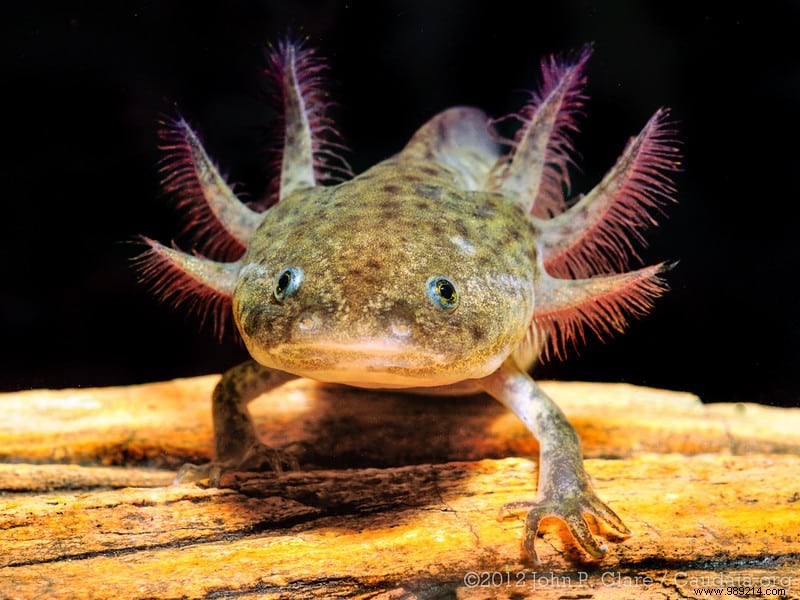
Popular as an aquarium pet, the axolotl draws far greater attention from researchers for its unparalleled regenerative potential. Could we harness these mechanisms to heal human tissues? Its genome, with 32 billion nucleotide pairs—ten times that of humans—presents a complex puzzle.
A landmark 2021 study in PNAS successfully mapped and sequenced its genome, a monumental achievement. Yet, key regeneration genes remain unidentified, demanding further rigorous investigation to unlock insights for human applications like advanced tissue regeneration.
Tragically, wild populations are vanishing from Mexican lakes, earning a "critically endangered" status from the IUCN. Conservation efforts by experts and organizations are urgent to safeguard this invaluable species.
