Joint popping or cracking often happens involuntarily, but many people turn it into a habit. What causes these sounds, and do they harm your joint health?
Occasionally, a click occurs when a tendon slides over a bony prominence in the knee or hip. Most cracks, however, stem from cavitation—the separation of joint surfaces that forms a gas bubble in the synovial fluid. This bubble collapses (or forms), producing the familiar pop (see diagram below). Though sometimes unintentional, deliberate joint cracking—known as self-manipulation—is a habit for many, and it's also common in chiropractic care, an alternative therapy with limited scientific backing.
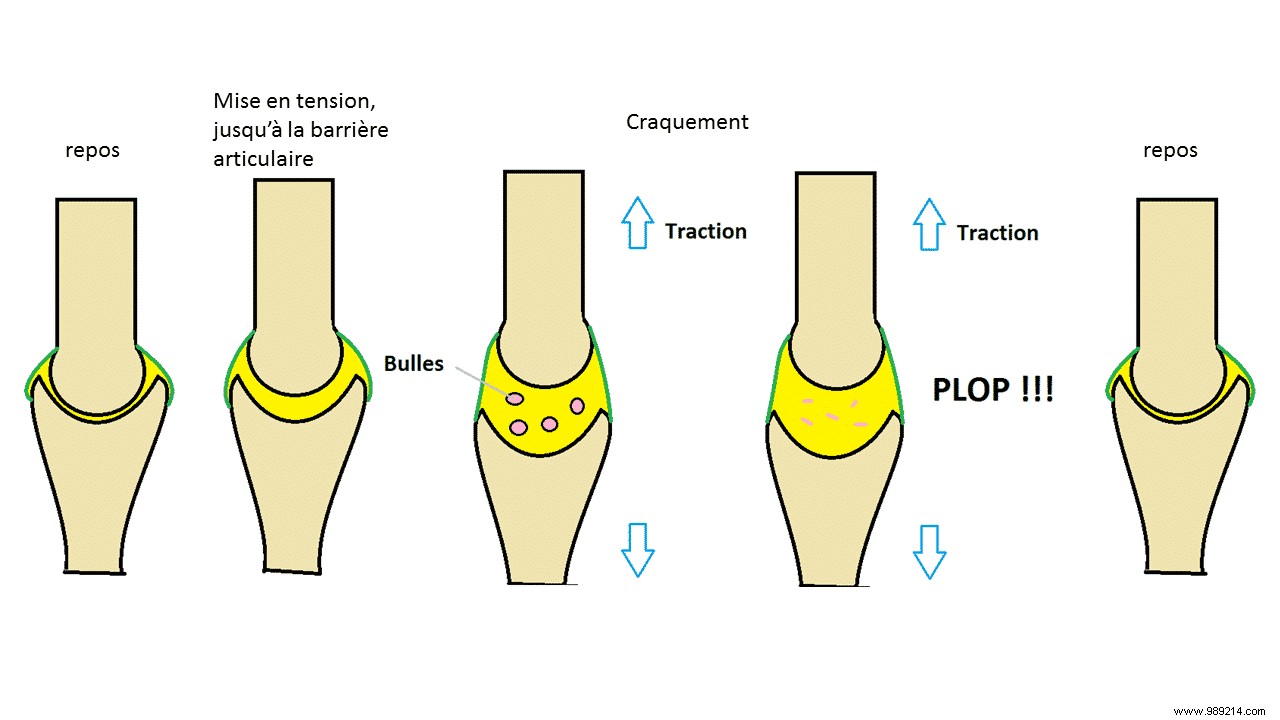
A widespread myth claims cracking joints leads to arthritis or osteoarthritis later in life. But is there truth to it?
Rigorous research shows joint cracking has no significant long-term negative effects. A 2018 study in Clinical Anatomy highlighted Dr. Donald Unger's self-experiment: for over 50 years, he cracked only one hand's joints, finding no arthritis difference versus the other. He earned the 2009 Ig Nobel Prize in Medicine for it.
A 1975 study compared older adults who frequently cracked their fingers with those who didn't. Results showed no heightened arthritis risk, even if minor joint damage occurred from cracking. The 2018 review noted rare injury reports, but these were uncommon and not severe.
Important caveat: this applies to fingers, not the neck. Cracking cervical vertebrae risks tearing vertebral arteries, potentially causing stroke in severe cases.
