New research reveals elite freedivers' brain oxygen levels may plunge even lower than seals' during their deepest dives.
Elite freedivers achieve extraordinary feats of human endurance in one of the world's most extreme sports. Holding their breath for over four minutes and plunging to depths exceeding 100 meters, these athletes test the boundaries of human physiology. But what physiological adaptations enable such performances?
Until recently, studying the brain and cardiovascular responses during real-world dives has been challenging, limited to lab-based simulations.
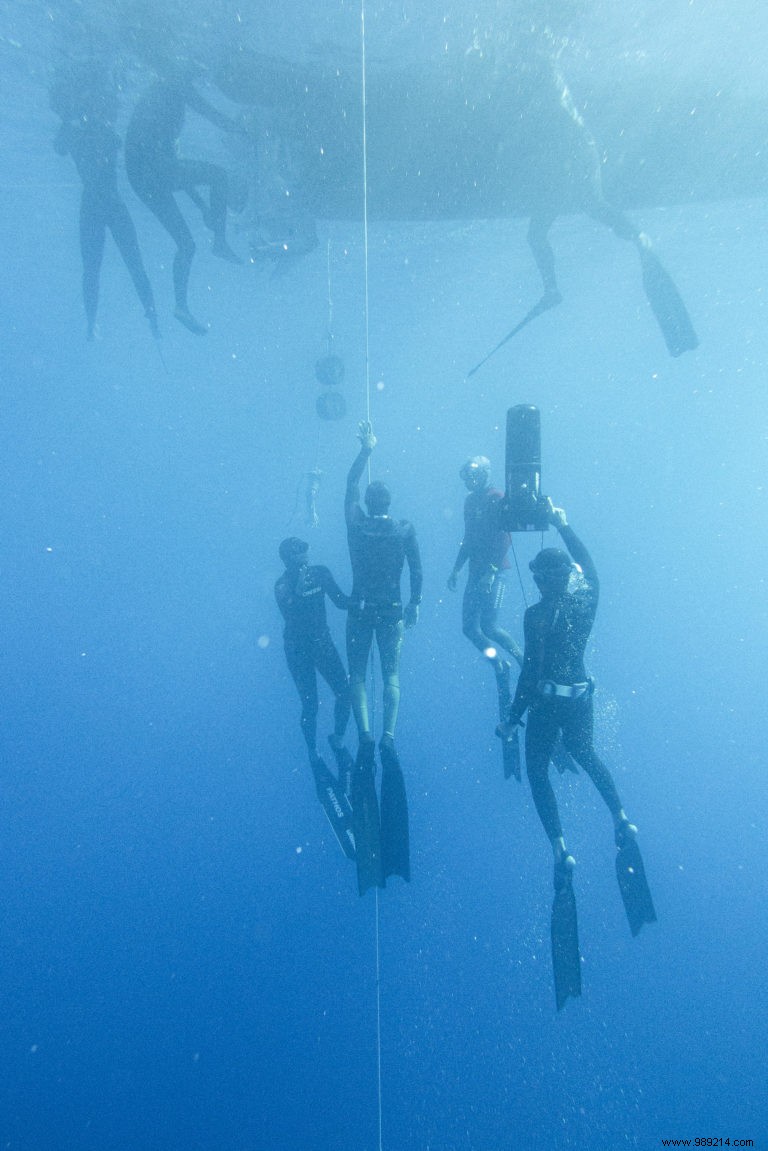
In a groundbreaking study published in Philosophical Transactions of the Royal Society B, an international team developed a wearable device—similar to a smartwatch using light-emitting LEDs on the skin—to measure heart rate, blood volume, and brain oxygen levels under extreme ocean pressures beyond 100 meters.
Collaborating with professional freedivers at sea, researchers captured staggering data. Blood oxygenation, typically around 98%, dropped to 25% at approximately 107 meters—levels surpassing those observed in seals, according to the University of St Andrews. For context, most people lose consciousness below 50% oxygenation.
While seals can hold their breath for up to two hours, freedivers' short bursts showcase remarkable tolerance.
Heart rates during dives fell as low as 11 beats per minute, a bradycardia response that conserves oxygen—mirroring rates in seals and certain whales.
“Beyond the exceptional physiological responses freedivers exhibit and the extremes they tolerate, they represent a uniquely informative group,” says Chris McKnight, co-author from the University of St Andrews. “Their responses offer invaluable insights into how the body copes with low blood oxygen, reduced brain oxygenation, and profound cardiovascular suppression.”
