Researchers have achieved a milestone by creating a fully functional artificial red blood cell through biomimetic reconstruction. This innovation holds immense promise for advancing blood-related medical therapies, potentially curing diseases like sickle cell anemia and enhancing treatment efficacy.
For years, scientists have aimed to engineer materials that mimic the essential properties of red blood cells. In a study published in ACS Nano on May 11, 2020, a team of American and Chinese researchers announced their success. This breakthrough offers real potential to boost the effectiveness of numerous treatments and address conditions such as sickle cell anemia, a genetic disorder affecting hemoglobin chains.
Prior research showed partial progress, but none matched the comprehensive functionality of natural red blood cells. These cells must be highly flexible to navigate the body's vascular network—from large arteries and veins to narrow capillaries. They serve as vital oxygen transporters via hemoglobin and require a lifespan of at least 10 hours for effective circulation.
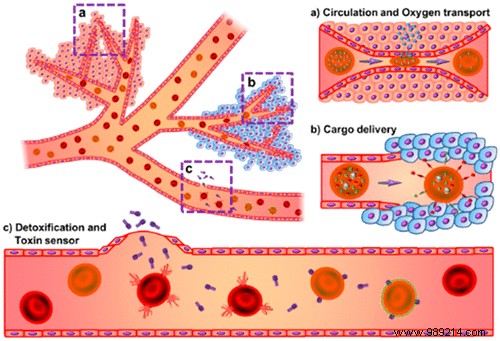
Led by Dr. Wei Zhu, the team employed a "silica bioreplication" method. They coated natural red blood cells with silica to create a mold, then removed it and layered on polysaccharide polymers—biocompatible, low-toxicity, and biodegradable materials commonly used in medicine. After etching away the silica, they applied a natural red blood cell membrane rich in identifying proteins, enabling seamless circulation in the bloodstream.
Beyond oxygen transport, these artificial cells could act as delivery vehicles for therapeutic molecules, improving drug distribution. Researchers envision gradually replacing diseased red blood cells in patients to treat various conditions.
