Mammograms detect breast lumps effectively but expose patients to ionizing radiation, potentially raising long-term cancer risks. Researchers at the University of Waterloo in Canada have pioneered a safer alternative using artificial intelligence and microwaves.
In a February 24, 2020, press release, University of Waterloo scientists unveiled an affordable, radiation-free technology for breast cancer screening. This innovative system integrates AI analysis with microwave signals.
Traditional mammography relies on X-ray imaging of the breasts, which is often painful, costly, and carries a proven risk of increasing breast cancer incidence over time due to radiation exposure.
Both X-rays and microwaves occupy the electromagnetic spectrum, but they differ significantly. X-rays, with wavelengths of 0.03 to 10 nanometers, are ionizing—they can strip electrons from atoms, posing health risks with repeated exposure. Microwaves, at about 1 mm wavelength, have lower penetration but cause minimal harm at safe levels.
The new device features a compact 15 cm² sensor under the exam table that emits harmless microwaves. Patients lie prone, positioning one breast in the box. The microwaves create reflections analyzed by AI, detecting anomalies under 1 cm in diameter by comparing tissue structures between breasts—not imaging, but precise anomaly detection.
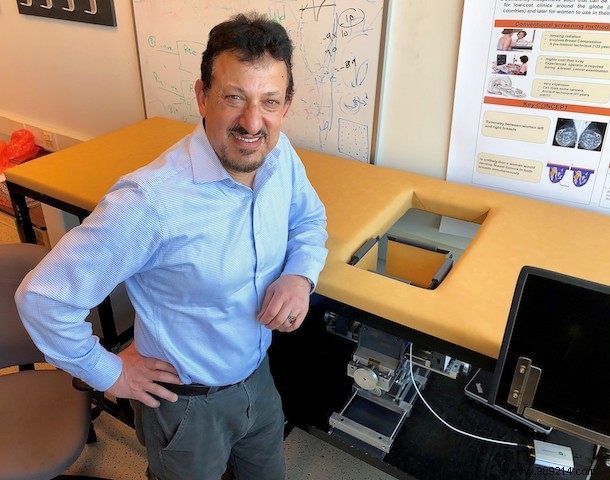
If an anomaly is flagged, physicians receive a recommendation for follow-up tests like mammography. This approach minimizes unnecessary X-ray exposures and delivers substantial cost savings.
Source
Related Articles:
