Family Encyclopedia >> Health

The Proven 45-Second Hand Washing Technique to Prevent Flu and Gastroenteritis

The Proven 45-Second Hand Washing Technique to Prevent Flu and Gastroenteritis

Influenza caused 14,400 deaths last year. However, hands transmit the flu virus in 80% of cases. The same holds true for colds, bronchitis, and gastroenteritis.

It's essential to wash your hands correctly to stay healthy. Here's a simple, effective method that takes just 45 seconds to drastically reduce your risk of flu or gastro.
The Proven 45-Second Hand Washing Technique to Prevent Flu and Gastroenteritis

Contents
  • How to wash your hands
  • Results
  • When to wash your hands
  • Additional tips

How to Wash Your Hands

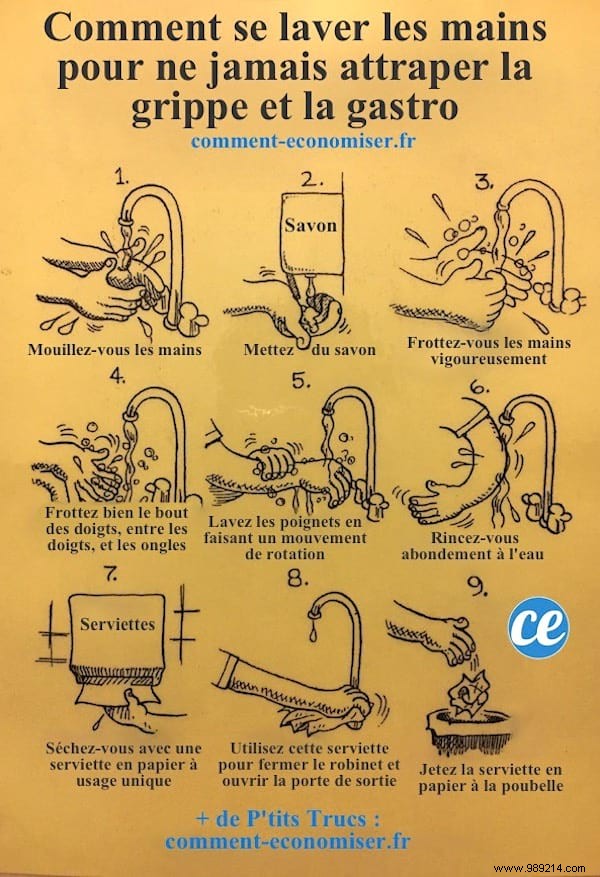
1. Wet your hands with a little water.

2. Apply soap to your hands.

3. Vigorously rub your hands together.

4. Scrub fingertips, between fingers, and under fingernails thoroughly.

5. Wash your wrists in a rotating motion using your other hand.

6. Rinse hands and wrists thoroughly under running water.

7. Dry with a single-use paper towel—one is sufficient.

8. Use the towel to turn off the faucet and open the door.

9. Discard the towel in the trash.

Results

Following this technique significantly lowers your risk of catching flu or gastro. It's quick, easy, and highly effective—worth the extra few seconds for better health.

If your hands are very dirty, add baking soda for extra cleaning power. Check out the trick here.

When Should You Wash Your Hands?

Make handwashing a daily habit to avoid flu and gastro viruses. Key times include:

  • Before eating
  • After using the toilet
  • After changing a diaper
  • Before caring for a baby
  • After sneezing or coughing
  • Before cooking
  • After handling raw meat or fish
  • After public transport
  • After petting animals
  • After taking out trash
  • After gardening, DIY, or mechanics
  • Whenever hands look dirty

Additional Tips

  • Remove jewelry like rings and bracelets first.
  • Clean nails, between fingers, wrists, and the back of hands thoroughly.
  • For fingers, hold them in your palm and rub back and forth.
  • Wash thumbs by enclosing them fully in the opposite hand and rotating.
  • Use a nail brush if available; otherwise, rub nails into the opposite palm.
  • At home, dry with a clean towel.
  • In public, opt for paper towels or toilet paper over cloth rollers or hot-air dryers, which can spread bacteria—prefer cold-air if needed.
  • Liquid soap outperforms bar soap, as bars can harbor bacteria in cracks.