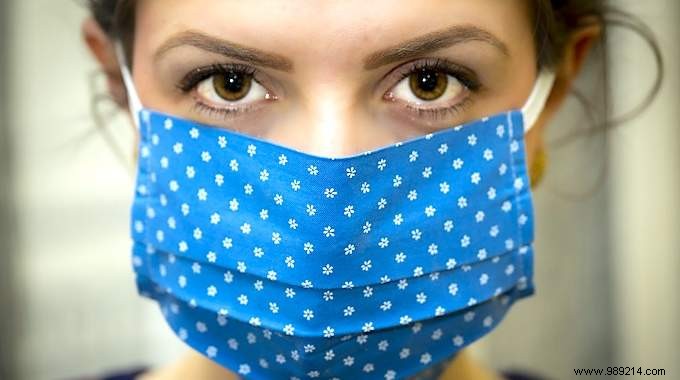
Wearing a fabric face mask is now standard in public places and on public transport. Homemade fabric masks offer a safe, economical, and eco-friendly option since they're reusable.
The key? Proper maintenance to prevent them from harboring germs and ensure ongoing protection.
Follow these AFNOR-recommended steps for effective use, washing, and drying.
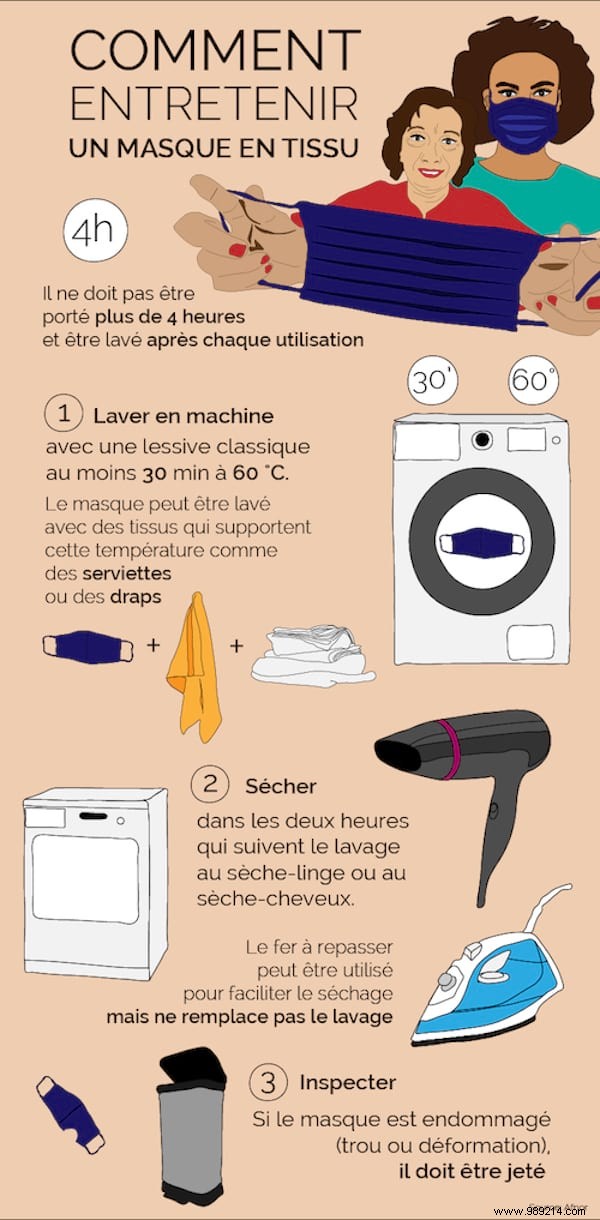
A fabric mask loses effectiveness when it gets wet from breathing or sweat.
Limit wear to no more than 4 hours at a time.
Always wash your hands thoroughly before putting it on.
Avoid touching the mask while wearing it to prevent contamination.
Wash after every use in a machine on a cycle of at least 30 minutes at 60°C.
Use detergent only—no fabric softener—and add a cup of white vinegar to eliminate bacteria and potential COVID-19 traces.
If you can't wash immediately, store it in an airtight container.
Scientific guidelines recommend it dries fully within 2 hours post-wash.
Air dry in sunlight if possible, or use a dryer or hairdryer.
Per AFNOR, iron with steam to smooth wrinkles, but avoid excessive heat to prevent damage.
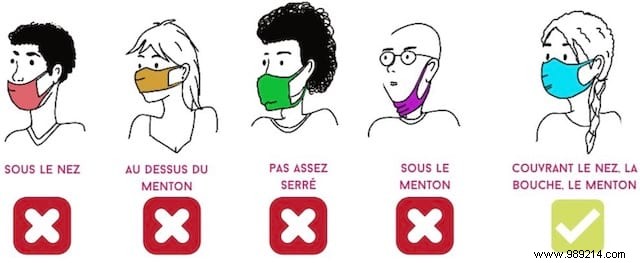
Proper fit is crucial for protection. Avoid these common errors: mask below the nose, above the chin, too loose, or hanging below the chin.
It must fully cover your nose, mouth, and chin.
Now you're equipped to use, wash, and dry your fabric mask correctly! Shop and stroll safely.
Recent studies show effectiveness diminishes after about 20 uses and washes—replace then.
Remember, masks complement—not replace—barrier gestures like frequent handwashing, 1-meter distancing, and coughing into your elbow.
Microwaving is ineffective against coronavirus and risky due to metal nose wires—avoid.
Skip bleach or alcohol; they damage fibers, reduce filtration, and leave harmful residues.
