 To relieve tension in your back and neck, targeted stretches are highly effective. The trapezius muscles, which span from the spine to the shoulders, often bear the brunt of daily stress.
 Poor posture at work, prolonged computer use, awkward positions on trains, sofas, or in bed, and high stress levels all contribute to trapezius tension. These muscles in the upper back and neck can lead to significant discomfort and pain.
Drawing from expert insights, we've consulted Lucile Woodward, a renowned sports coach, and Frédéric Srour, a physiotherapist, ergonomist, and author of Même pas mal ! The guide to good gestures and good postures. Their recommendations include daily habits, simple exercises, and stretches to relax trapezius muscles and alleviate back stiffness.
The trapezius comprises upper and lower portions. The upper trapezius—between the neck and shoulders—is often the source of pain. The lower trapezius supports the torso and, when overstretched, contributes to shoulder discomfort. Alongside the psoas, calves, and glutes, these are key stress-holding areas. Incorporate shoulder rotations to activate them effectively.
Video of the day:For daily tension relief, Lucile Woodward recommends self-massage. To target the left trapezius, support your left elbow with your right hand. Use your left hand to knead the muscle, applying arnica oil for enhanced soothing. Perform this 3-4 minute massage twice daily.
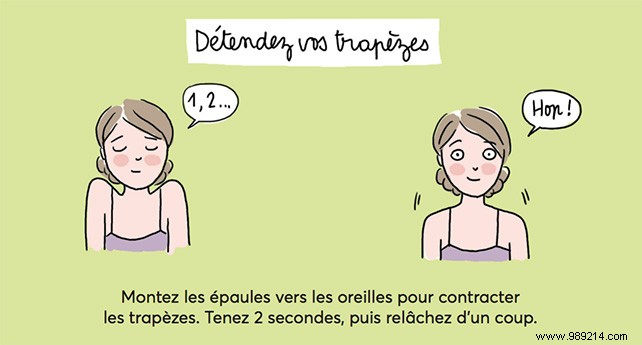
Both experts endorse this straightforward technique to ease upper back pressure.
Inhale deeply and shrug your shoulders high. Hold for 3-4 seconds, then exhale sharply and drop them. Repeat as needed to boost circulation, relax the trapezius, and improve breathing.
 © Not bad at all! - illustrations Emmanuelle Teyras
For trapezius pain, Lucile Woodward suggests this gentle stretch to reduce stiffness.
Tilt your right ear toward your right shoulder slowly, then lower your chin to your chest. Switch sides, moving mindfully to avoid strain.
Frédéric Srour's go-to for knotted trapezius: subtle shoulder rolls forward and backward. Do 3 sets of 10 daily—perfect for the car, checkout line, desk, or kitchen.
At your desk, incorporate gentle head and shoulder shifts side-to-side and up-down. Vary sitting positions and take movement breaks.
Yoga's eagle pose (Garudasana) reduces stress and relaxes trapezius muscles. This standing balance pose suits beginners and experts alike, promoting focus.
Screens are prime culprits for trapezius tension, exacerbating muscle pain.
Experts urge minimizing exposure via digital detoxes—power down devices periodically. Position printed documents between keyboard and screen; read while seated back, not hunched.
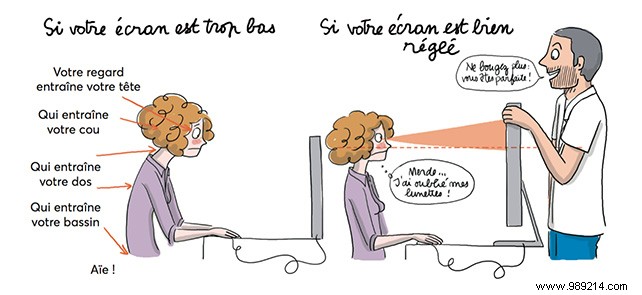
Frédéric Srour advises workstation optimization for seated workers: adjust chair height, backrest angle, armrests, and screen position.
Sit upright with eyes level to the screen's upper third to prevent forward neck pull and trapezius strain.
 © Not bad at all! - illustrations Emmanuelle Teyras
