At CES 2022, French startup Skincasts introduced innovative 3D-printed splints as a superior alternative to traditional casts. Hundreds of users have already experienced these lightweight, radiolucent, and fully customizable solutions.
The Consumer Electronics Show (CES) returned in person to Las Vegas from January 5 to 8, 2022, after a virtual 2021 edition. Despite enhanced anti-COVID measures and reduced attendance, the event proved a triumph for French startups, with 140 participating. Among them was Skincasts, based in Arles and one of 15 selected by the South Region for CES.
Partnering with Vr'tig.0 studio, Skincasts crafts splints from polylactic acid (PLA), offering a game-changing alternative to plaster casts. 3D printing enables precise made-to-measure fits and personalization. These splints are radiolucent for clear X-rays, ultra-lightweight, and allow full joint mobility. Excellent ventilation prevents odors, and they're waterproof for swimming—eliminating the maceration and restrictions of conventional casts.
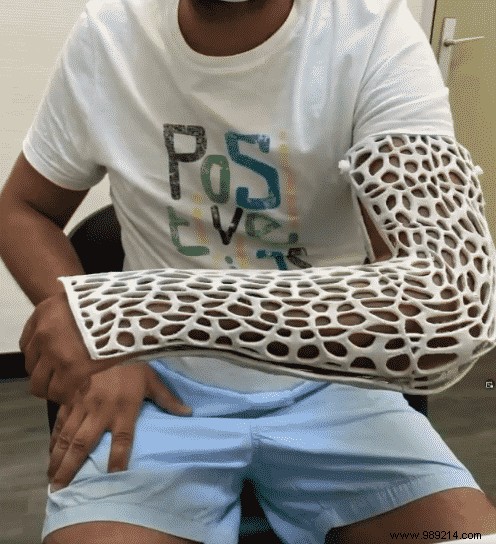
Production starts with a scan of the injured area, followed by CAD software modeling. Printing takes about four hours, varying by size. PLA, derived from renewable sources like tapioca, corn starch, or sugarcane, ensures the splints are fully biodegradable and recyclable—aligning with environmental priorities. In France, Health Insurance reimburses up to 60%, with patients covering the balance.
Skincasts leveraged CES 2022 to secure technical, scientific, and financial partnerships for international expansion, especially in North America. The startup has already supported hundreds of patients, gathering real-world feedback to refine its technology.
Here's a video showcasing the Skincasts splints in action:
