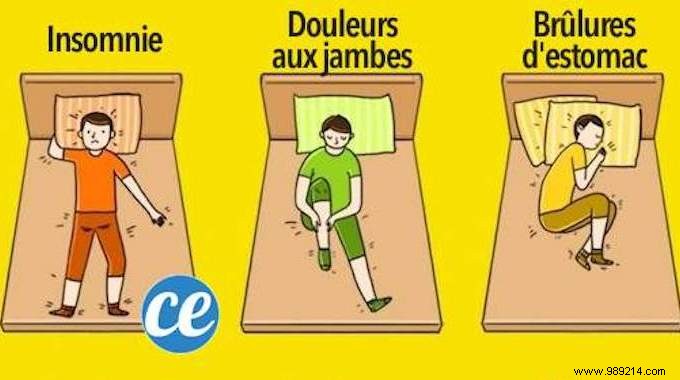
We spend about a third of our lives asleep—a fact everyone knows. But what many don't realize is that your sleeping position significantly impacts sleep quality and overall health.
Fortunately, sleep specialists recommend specific positions to address common issues like pain and disruptions. Here are the 9 best sleeping positions backed by experts to help you wake up refreshed. Watch:

Source: Brightside.me
If you wake up with shoulder pain, avoid side-sleeping on the affected shoulder or stomach sleeping, which can misalign your shoulders.
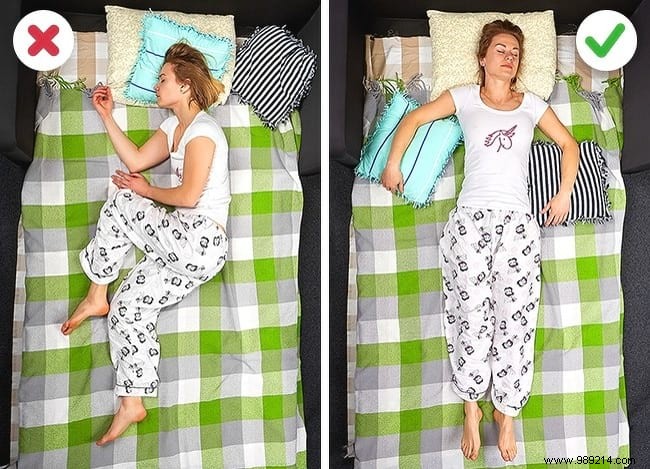
The optimal position: Lie on your back with a thin orthopedic pillow under your head. Hug another pillow to your stomach with your arms. This balances shoulder pressure effectively.
Alternative for side sleepers: Use the non-painful side, draw your legs slightly toward your chest, and place a pillow between your knees. Avoid tucking your hand under your head, as it strains the shoulders.

Source: Brightside.me
Maintain your spine's natural curves—replace overly soft mattresses if needed.
Best: Back sleeping with a pillow under your knees to ease tension, and a rolled towel under your lower back for support.
For stomach sleepers: Place a pillow under your lower abdomen and pelvis to minimize lower back movement.
For side sleepers: Fetal position—legs slightly toward chest, pillow between knees—to relieve lower back strain.
Source: Brightside.me
Support your neck like your back during sleep.
Ideal: Back sleeping with a pillow under your head and one under each arm. Opt for orthopedic or memory foam pillows.
Side sleeping: Use a pillow no thicker than 15 cm (matching shoulder width) for a straight neck.
Stomach sleeping: Use a very thin pillow, but avoid it entirely—head-turning strains neck muscles.

Source: Brightside.me
Screen light from phones or computers disrupts your circadian rhythm—avoid them before bed.
Skip caffeine (coffee, energy drinks, soda, tea, chocolate) at least 6 hours prior.
Exercise mornings or afternoons to boost circulation and promote faster sleep onset.

Source: Brightside.me
Besides no screens, avoid alcohol—it imbalances hydration and sleep cycles.
Keep room temperature at 20-22°C, per studies, for optimal sleep.
Related: What Is The Ideal Temperature In Each Room In Winter?
Source: Brightside.me
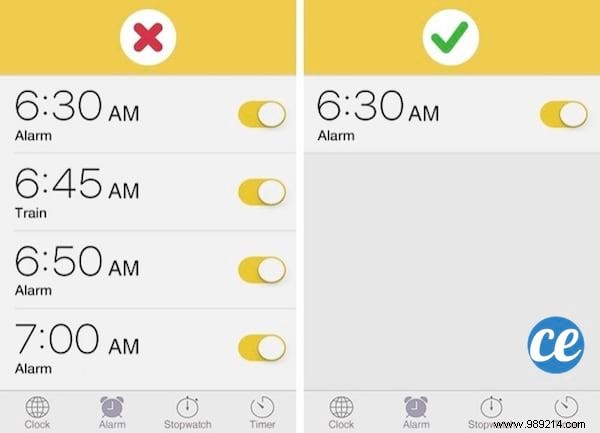
Set a consistent wake-up alarm daily, even weekends—no multiple alarms, as they fragment sleep.
To rise earlier, simply go to bed earlier.
Source: Brightside.me
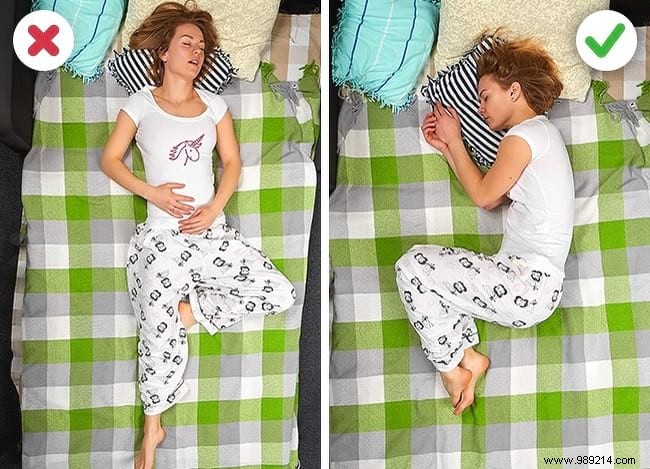
Avoid back sleeping—it causes throat tissues to sag and tongue to block airways.
Choose a firm pillow; elevate bed head if possible.
Sleep on your side for natural airway alignment.
Strengthen throat muscles with targeted exercises.
Source: Brightside.me
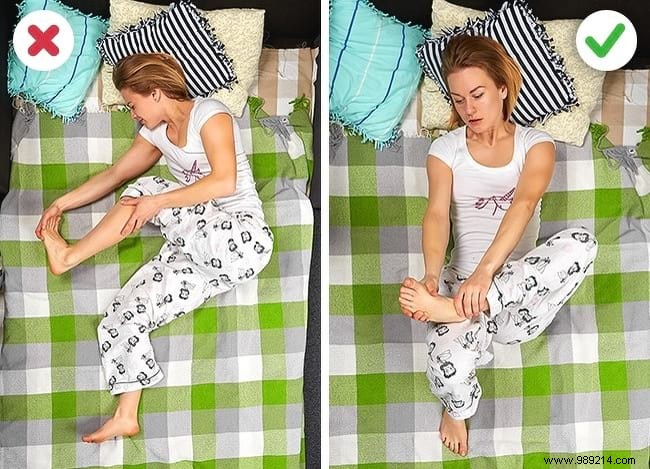
Affecting over 80% globally, cramps signal mineral deficiencies, nerve issues, or illness—consult a doctor if persistent.
Stretch and strengthen calves via yoga or pre-bed massages, consistently.
Sleep problems stem from fatigue, tight shoes, digestion, or nervous system issues—see a doctor for diagnosis.

Source: Brightside.me
For heartburn: Left-side sleeping keeps stomach acid down.
For leg aches: Elevate legs with a bolster, massage, avoid caffeine 6 hours pre-bed.
