 While most moles are harmless, some can signal danger. As a dermatologist, Isabelle Gallay shares a step-by-step procedure to monitor them effectively and catch potential skin cancer early.
 Dermatologists emphasize regular melanoma screening—the most aggressive form of skin cancer—urging sun protection and mole checks. The National Syndicate of Dermatologists-Venerologists notes that most moles are benign but require monitoring, as melanoma can spread rapidly.
As a reminder, melanoma is the leading cause of death for women aged 25-29, with two-thirds arising on healthy skin without pre-existing moles.
Moles, or nevi, typically develop from childhood, peaking in adolescence and up to age 30. Adults average about 20 scattered across the body, varying by genetics and sun exposure.
Isabelle Gallay, dermatologist, recommends annual mole checks for peace of mind. La Ligue contre le Cancer reports 7,000 new melanoma cases in France yearly.
"Through the National Syndicate of Dermatologists-Venerologists, anyone can book a free annual screening," she explains.
 © dnberty/iStock
This is especially vital for those with family history of skin cancer or atypical moles. When in doubt, consult a dermatologist immediately.
Start by knowing your skin: Take reference photos for comparison. Enlist help for hard-to-see areas like the back, advises Isabelle Gallay.
The Syndicate outlines eight self-exam steps:
Use a mirror for neck, shoulders, back, buttocks, and backs of thighs. Then, seated, check fronts of thighs, legs, soles of feet, nails, and genital area.
Regular checks help spot new, unusual spots or rapid changes in moles.
Try the free iSkin app from Institut Gustave Roussy, Europe's top cancer center, to track moles and build a routine.
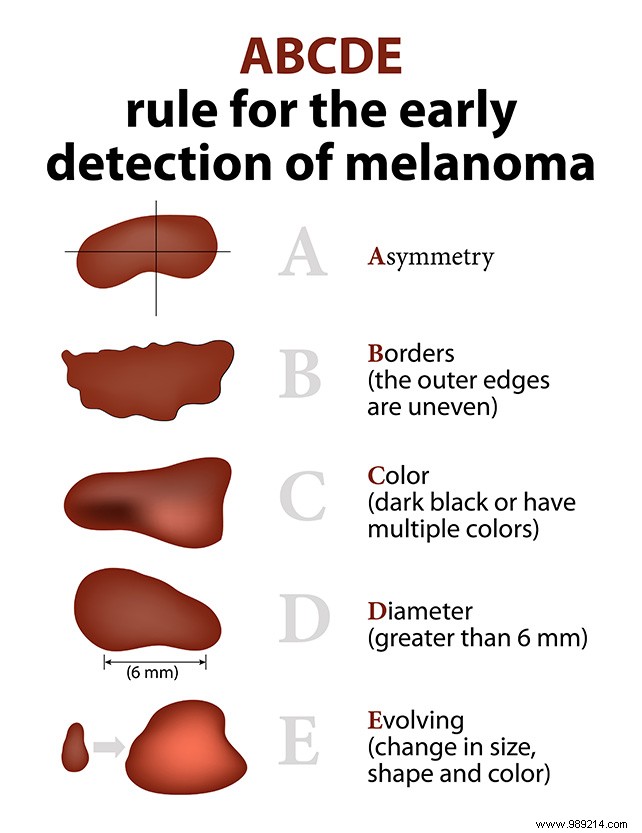
Consult a dermatologist at any concern. Most moles, even new ones, are harmless, but use the ABCDE rule for self-checks:
A: Asymmetry – Two halves don't match.
B: Border – Jagged, irregular, or pigments bleeding outward.
C: Color – Varied shades like black, red, blue, brown, or white.
D: Diameter – Over 6mm or growing quickly.
E: Evolution – Any rapid change in size, shape, or texture.
 ©iStockphotos.com/ttsz
Gallay stresses evolution: Monitor new spots or changes. If it grows, roughens, or alters in three months, seek care.
Dermatologists biopsy suspicious moles. In 80% of cases, they're benign; simple removal heals immediately.
For higher risk, a 5mm margin ensures safety, per Gallay. If a mole bleeds after scratching, observe closely—it's often harmless. Prioritize vigilance and skin familiarity.
Finally, avoid sun from 11 a.m.-4 p.m., use year-round SPF, hats, and at least SPF 30 in summer.
Read also: