 Shockingly, 61% of French people hesitate to perform cardiac massage on an unconscious, non-breathing person. Dr. Pascal Cassan, National Medical Advisor for the French Red Cross and author of First Aid for Dummies (Ed. First), shares proven techniques to save lives.
 Each year, 1 million people suffer domestic accidents in France, with 20,000 fatalities. Alarmingly, 80% occur at home, and 61% of French adults lack the reflex for cardiac massage in cardiac arrest scenarios, according to the French Red Cross.
The Red Cross aims to empower everyone with simple, effective gestures that bridge the gap until professionals arrive—typically 7 minutes for firefighters or 15 for SAMU.
Dr. Cassan explains how anyone can master these techniques to potentially save a life.
"Cardiac arrest is dramatic but manageable with the right knowledge," says Dr. Cassan. Survival odds improve with more trained bystanders.
Recognize it quickly: sudden collapse, unconsciousness, no breathing. Act fast—every minute without intervention cuts survival chances by 10%. Help until pros arrive.
Three key actions: Call (help), Massage (CPR), Defibrillate.
Calling provides real-time guidance, especially for first-timers. For CPR: Place the heel of one hand in the center of the chest (sternum), stack the other hand, and compress 120 times per minute at full depth. Continue until help arrives. If a defibrillator (AED) is nearby, follow its voice prompts: apply pads, stand clear, and let it analyze and shock if needed.
A heart attack claims a life every 10 minutes in France.
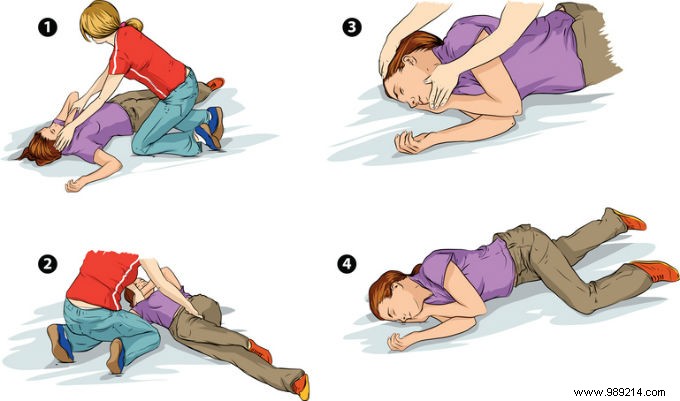
Unlike cardiac arrest, the person is breathing but fainted.
Place them in the recovery position on their side (avoid if trauma like a car crash or high fall is suspected). Never leave on their back—risk of vomit or tongue obstructing airways, warns Dr. Cassan.
lukaves / iStock
Three steps: Press, Lay down, Alert.
For amputations (finger, hand, etc.): Stop bleeding by direct pressure. Lay the victim down to maintain blood flow to the brain. Call emergencies.
Preserve the severed part: Wrap in clean cloth or plastic bag, place on ice bed (never direct contact or freezer). Surgeons can reattach if handled properly, per Dr. Cassan.
A foreign object can block the airway at the esophagus-trachea junction, causing silence, no breath—leading to suffocation and cardiac arrest if untreated.
Act fast: 5 back blows between shoulder blades or Heimlich maneuver. For adults: Stand behind, fist to navel (thumb in), grasp with other hand, thrust upward sharply. For children: 5 chest thrusts.
Avoid myths like butter or ointments—they trap heat. Cool under running lukewarm water to prevent blisters, advises Dr. Cassan.
For large burns (bigger than hand): Call emergencies. Then apply doctor-recommended sterile dressing.
For wounds: Wash hands first. Rinse with soapy water (Marseille soap ideal) to remove 80% of germs—skip alcohol. Disinfect if advised, cover with bandage. Monitor 2-3 days for infection (redness, heat, pain); see a doctor if signs appear.
World First Aid Day (September) offers sessions on basics, cardiac emergencies, and accident prevention (PREVIC) for all ages.
Year-round: PSC 1 certification (from age 10, 8 hours) teaches accident response and risk reduction. Earns European First Aid Certificate (BEPS).
Initiations include child/infant aid, self-protection, and core gestures.
Read also: