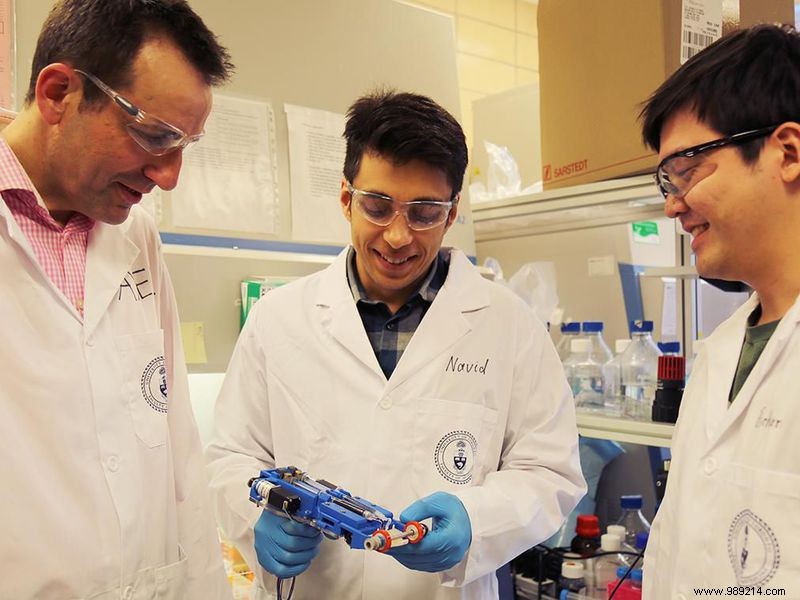
Researchers at the University of Toronto are testing a groundbreaking portable device that prints thin sheets of artificial skin directly onto burn wounds.
Picture a severe burn patient arriving at the hospital, requiring immediate skin grafts. A surgeon deploys a compact, handheld device over the injury, rapidly extruding layers of biocompatible skin to cover the damaged area.
This innovative scenario could soon become standard practice, thanks to advancements from the University of Toronto team.
Traditionally, physicians harvest healthy skin from another part of the patient's body to graft onto burn sites after debriding damaged tissue. Yet, this approach isn't always feasible.
In extensive burns, both epidermal and dermal layers may be obliterated, leaving insufficient donor skin. An alternative—culturing collagen scaffolds—takes weeks, heightening infection risks. The ideal solution: swift, on-site skin replacement to promote healing and minimize complications. Enter the Toronto researchers' device.
In 2018, the University of Toronto team unveiled the first portable bioprinter that deposits sheets of artificial skin directly on burns. The bio-ink comprises collagen—the dermis's primary protein—and fibrin, essential for clotting and repair.
Initial animal trials were promising. Recent pig studies, led by burn expert Marc Jeschke, confirmed success, paving the way for human clinical trials.
"The device successfully deposited 'sheets of skin' on wounds evenly, safely, and reliably, with minimal movement," said Jeschke, principal investigator. "Treated wounds healed exceptionally well, showing reduced inflammation, scarring, and contractions compared to untreated wounds or collagen scaffolds," he added.
If commercialized, this technology could transform burn care. Ongoing collaboration with surgeons ensures it meets real-world clinical demands.
Source
Related articles:
