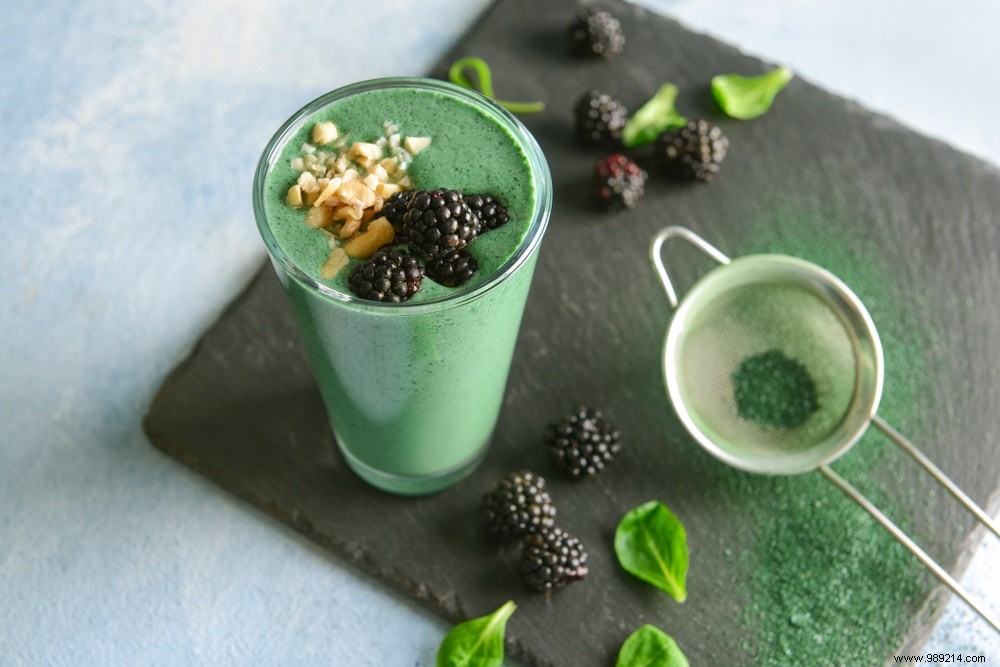
Discover spirulina, the vibrant blue-green microalgae available as powder or capsules. Dubbed a superfood, it's loaded with vitamins, minerals, and powerful nutrients that support overall health. Learn when and how to use it, plus key precautions, backed by reliable health sources.
What is spirulina?
Spirulina, often called blue-green algae, is a nutrient-dense microalgae that absorbs minerals from its environment. It flourishes in warm waters above 30°C (86°F). We consume the entire dried or fresh organism, rich in essential minerals, vitamins, and trace elements.
Its exceptional profile—55-70% high-quality protein, beta-carotene, iron, magnesium, antioxidants, gamma-linolenic acid (an omega-6), and vitamins A, B1, B2, B3, B6, B7, B8, B12, D, E, and K—earns it superfood status among nutrition experts.
Key health benefits of spirulina
Backed by studies, spirulina offers targeted support:
How to incorporate spirulina into your routine
Available as flakes, powder, or tablets:
Standard dose: 1-5g/day, up to 10g for athletes. Adjust based on needs and body size.
Quick Spirulina Smoothie Recipe
Serves 4. Blend all ingredients; chill and pair with breakfast for a nutrient boost.
Spirulina precautions and contraindications
Consult a pharmacist or doctor before starting. Avoid if pregnant, breastfeeding, or undergoing chemotherapy. Overdose may cause digestive upset.
Choose traceable sources like French-produced spirulina from pharmacies or organic stores to minimize contamination risks from polluted waters, as algae readily absorb toxins.
This versatile microalgae delivers essential nutrients daily. For more on sleep, diet, and stress, check our prevention videos.
Source:
https://www.doctissimo.fr/html/sante/phytotherapie/plante-medicinale/spiruline.htm
https://www.passeportsante.net/fr/Solutions/PlantesSupplements/Fiche.aspx?doc=spirulina_ps
https://www.e-sante.fr/spiruline-les-risques-et-les-contre-indications/actualite/616208
