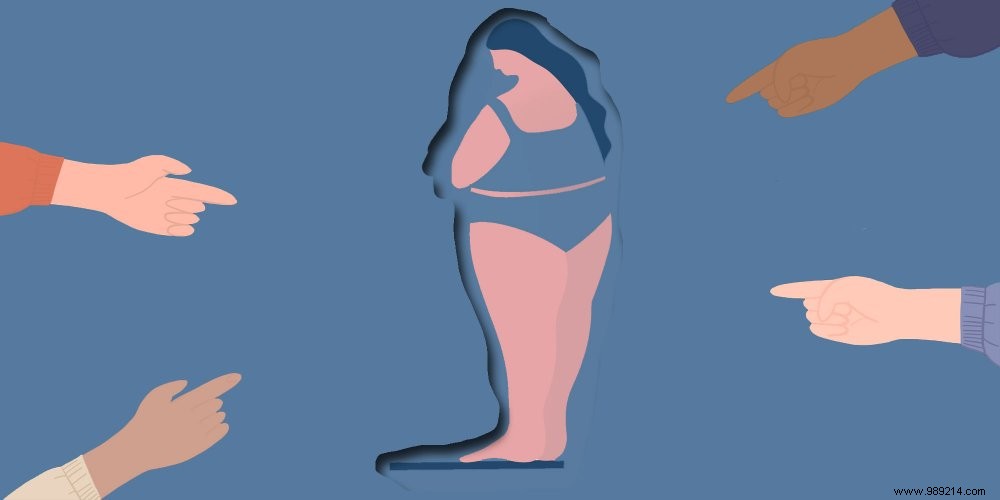
 Harsh stares and guilt-tripping comments from some doctors leave lasting scars on overweight and obese patients, driving many to avoid medical care altogether and risk their health. Real patient stories reveal the pervasive stigma across healthcare settings.
 "There's a thin person inside you just waiting to live." Pelphine was still a teenager when her psychologist delivered this blow. Now 30, the fat activist behind the Instagram project Corps Cools recalls the "infinite violence" of that moment. Later, her dentist suggested bariatric surgery.
These guilt-inducing words reflect medical fatphobia—the stigma and discrimination overweight or obese people face from doctors and caregivers. The fallout, including denied care or misdiagnoses, can be devastating.
Marine, a 24-year-old special education teacher, switched GPs after repeated lectures on her weight, regardless of her actual complaints. "I'm well aware my weight is a health risk factor, and I stay vigilant," says the Instagram advocate Marine Plus Size, who promotes body acceptance.
Video of the day:
Once, seeking treatment for angina, her doctor blamed her weight—despite her history of fragile tonsils and recurrent infections. "If I lose weight, do my tonsils shrink too?" she retorted. An ENT specialist later confirmed angina affects patients of all sizes.
"Studies show doctors often urge obese patients to lose weight instead of ordering tests or therapy they'd prescribe for normal-weight patients," notes Joan C. Chrisler, Connecticut College researcher, at an American Psychological Association conference in Washington.
Pascale, a Corsican teacher, echoes this: her nutritionist warned of heart attack or stroke—before even reviewing her tests, when she was just 13 kilos overweight. "How could she say that?" the 50-year-old still wonders, scarred by the encounter.
Doctors' attentiveness fades with larger patients; their gazes often betray disgust. Marine recalls a practitioner scanning her head to toe upon entry, radiating judgment. Chrisler describes doctors' "disapproving attitudes," from cutting remarks—"inevitable for fat people," per Pelphine—to subtle microaggressions patients feel deeply.
"Doctors can discuss this benevolently, and we'd listen," Marine says. "It's the tone and the look that hurt."
Pelpine's doctor father watched her grow up on balanced meals like his own—yet assumed overeating caused her weight. This anecdote highlights a core myth: fatness stems solely from poor diet.
"There were no fat people in concentration camps," her doctor once said, implying starvation guarantees thinness.
"Stop seeing us as gluttons," urges the educator, noting thyroid issues or genetics—often ignored. "Review medical history, not just appearance," she insists. Chrisler urges viewing obesity beyond diet, considering full context.
"The thin swallow, the fat swallow," quipped a GP on Karine Lemarchand's Operation Renaissance on M6 (Jan. 11), viewed by 1.9 million. Marine was outraged: "If experts peddle clichés, we'll never progress against fatphobia." She laments focus solely on weight loss.
Pelpine opposes the show's bariatric focus: "We ignore psychological toll and risks." A 2018 French National Health Insurance analysis she cites shows 15% postoperative surgical issues, 19% digestive, 5% severe nutritional, and 22-46% diabetes relapse.
Via Corps Cools and Brussels' Fat Friendly association, she highlights uninformed patients. "Does weight loss justify such violence?" she asks.
Pascale avoided nutritionists for two years post-trauma. Pelphine endured seven years away from care; dentistry still paralyzes her after humiliation. Now, she sets boundaries upfront as a fatphobia activist.
Many flee healthcare fearing judgment, risking undetected diseases. Studies link overweight women's higher breast/cervical cancer mortality to delayed care, per Huffington Post's "Everything You Know About Obesity Is Wrong."
Fatphobia also causes misdiagnoses. Initiatives like Gras Politique's "safe doctors" directory and Fat Friendly's planned Belgian center aim to rebuild trust: "Treat ear infections, not push surgery," Pelphine says.
Centers must adapt: armrest-free chairs, wide tables without steps. "Fatphobia includes inaccessible spaces," Pelphine notes, highlighting the paradox of scrutinized yet invisible bodies.
Even adapted tools stigmatize—like a blood pressure cuff labeled "Obese," sparking tears. GP and author Baptiste Beaulieu shared this on France Inter, prompting the manufacturer to switch to "XXL."
Overweight patients are excluded from trials; dosages underperform, risking harm, per Chrisler. Medical fatphobia means forgotten listening, space—and humanity.
Read also:
